
Polyester Webbing vs. Nylon Webbing vs. Polypropylene Webbing
Webbing is a versatile and essential component in various industries, known for its strength, durability, flexibility, and many other features, depending on the different webbing materials you choose. Whether you use the webbing for securing cargo, designing a harness, or making a safety belt, the type of webbing you choose will affect its performance, safety, and longevity.
When it comes to webbing, you can find 3 most popular materials: polyester, nylon, and polypropylene. Each of them has its unique features and is suitable for different applications. In this blog, we will talk about these 3 types of webbing in detail to help you make a correct decision when making the selection.

What is Webbing?
Webbing is a strong and woven fabric that is commonly made from synthetic fibers such as polyester, nylon, polypropylene, or other materials. It is generally produced by weaving fibers into flat strips or tubes. The material is flexible and durable. The webbing can be made into various widths, lengths, thicknesses, and strengths according to different requirements.
Polyester Webbing
Polyester webbing is one of the most popular webbing materials, due to its high strength, durability, and resistance to environmental factors. This webbing material is widely used in outdoor and industrial environments, because it performs the best when exposed to the elements among the 3 webbing materials.
Characteristics
- Durability and Strength: Polyester webbing is highly durable and can be able to withstand long-term wear and tear. It offers excellent tensile strength, which means it can bear heavy loads without breaking.
- UV Resistance and Weather Durability: Unlike the nylon webbing, the polyester is naturally resistant to UV rays, which means it will not degrade or lose strength when exposed to the sunlight for a long time. It also perform good under extreme weather conditions, such as extreme cold, extreme heat, and humidity, suitable for outdoor use.
- Low Stretch and High Stability: Polyester webbing has low stretch. This feature makes it a good product to maintain the shape and stability of the items it secures. If you are working on cargo securement, this is the best material for your choice.
Common Uses
- Outdoor Gear: Polyester webbing is used to make backpacks, harnesses, cargo straps, and other outdoor gear that requires durability and resistance to the elements.
- Industrial Applications: It is widely used in the industrial sector, such as lifting slings, seatbelts, and cargo restraints due to its strength and long-lasting performance under stress.
Nylon Webbing
Nylon webbing is known for its high strength and flexibility, making it a reliable material in many applications.
Characteristics
- High Tensile Strength and Elasticity: Nylon webbing, featuring super high tensile strength, can support heavy loads without breaking. Its elastic nature allows it to stretch under pressure, which is good for the application that needs shock absorption.
- Good Resistance to Abrasion and Wear: Nylon webbing is resistant to abrasion, making it suitable for high-friction applications. This feature makes it a good choice for heavy use.
- Less Water Resistant: The water resistance of nylon webbing is far inferior to that of polyester and polypropylene. It is best not to use this material in a humid environment.
- Less UV Resistant: Exposing the nylon webbing to the sunlight can weaken nylon fibers, which can lead to a reduction in its strength. So, this webbing is not suitable for prolonged exposure to sunlight.
Common Uses
- Climbing Gear: Nylon webbing is used to make the climbing harnesses, slings, and anchors due to its strength and flexibility.
- Belts and Straps: Various belts and straps can be made from nylon webbing, such as belts, luggage straps, and outdoor equipment.
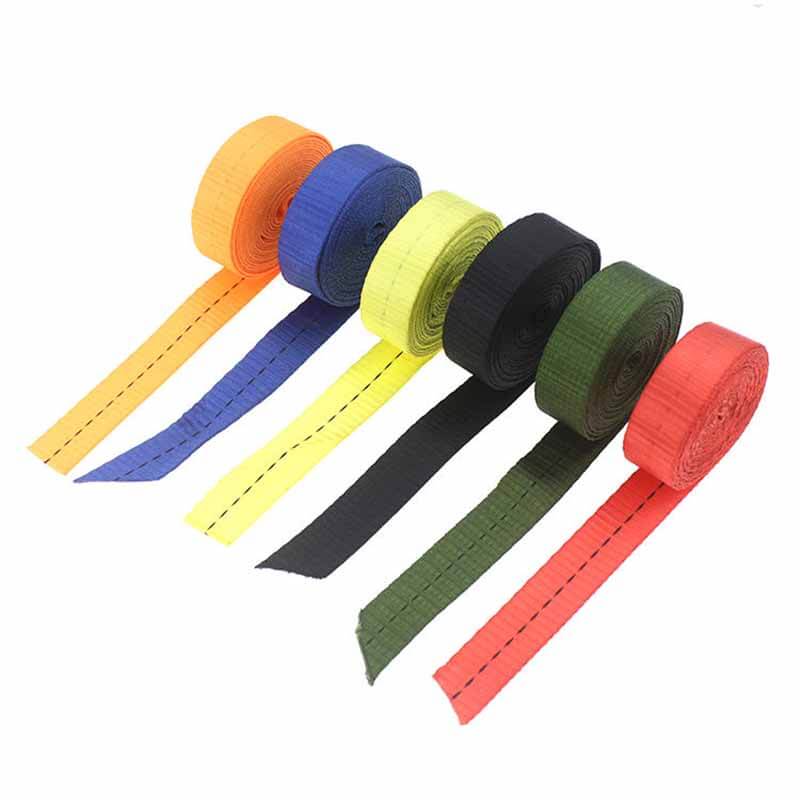
Polypropylene Webbing
Polypropylene webbing is the cheapest material among the three, and it is lightweight. This makes it a popular choice in many applications.
Characteristics
- Lightweight and Cost-Effective: Among the three materials, polypropylene webbing is the lightest material, suitable for applications where lightweight is important.
- Good Water Resistance and Buoyancy: Polypropylene webbing has good waterproof performance, and it can float on the water. This feature makes this material very suitable for use in water sports and marine applications.
- Resistant to Chemicals: Polypropylene webbing is resistant to acids, solvents, and other chemicals, this feature allows the webbing to withstand such substances.
- Limited Temperature Resistance: This webbing is not suitable for high-temperature working environments, since it has a lower melting point.
Common Uses
- Water Sports Equipment: The webbing is used in life jackets, water skis, and wakeboards, these application needs lightweight and water-resistant webbing.
- Utility Straps and Tie-Downs: The strap made from polypropylene webbing can be used for tie down lightweight items in wet conditions.
Each type of webbing offers its specific characteristics. When you need to use webbing to make some products or as a component of your product, you can consider the above factors to decide which one is best for your needs.
Webslingness has been producing polyester webbing for over 17 years in China. We offer custom made service for you. If you want to buy the webbing, contact us to get the wholesale price!
You may also be interested in:
Dave Lee
Dave Lee has amassed over two decades of experience in the cargo control industry, serving as a product manager. Prior to joining Webslingness, he spent three years at a transportation company.


