
Selecting the Best Cargo Straps with Hooks for Transport

Whether you are transporting large machinery or moving daily household items, the cargo straps with hooks can help you secure the loads and remain stable, protect them from damage or shifting.
There are various types of hooks available for cargo straps, each designed to meet specific needs. The choice of cargo strap hooks will affect how well your load is secured. In this blog, we will focus on the different hooks used with cargo straps and their performance in cargo transportation.
What Are Cargo Straps with Hooks?
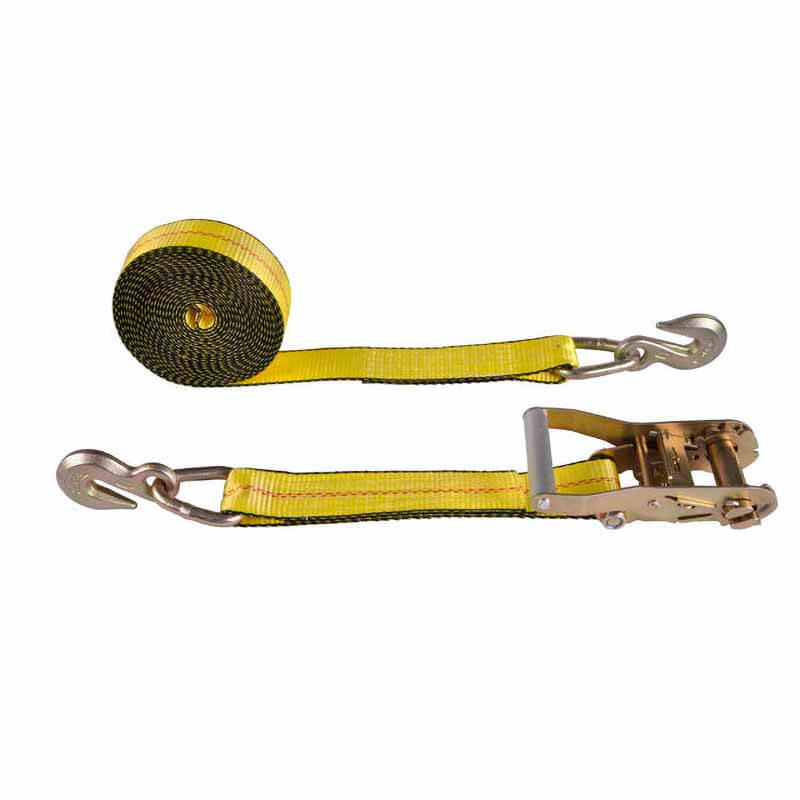
Cargo straps with hooks are the specialized tie down tools used for securing loads during transportation. They consist of durable webbing, typically made from polyester, equipped with hooks at each end to attach to different anchor points on vehicles. These straps can keep the cargo firmly in place and prevent movement or damage while in transit.
Types of Cargo Straps
As we mentioned, we will talk about the tie down straps with hooks. So, what kind of tie down straps will talk today? That’s ratchet straps and cam buckle straps.
Ratchet Straps with Hooks
Ratchet straps with hooks are suitable for tying down the heavy-duty cargo. With the ratchet mechanism, they can achieve precise tensioning for securing machinery, vehicles, or industrial equipment.
Cam Buckle Straps with Hooks
The cam buckle straps with hooks use the cam buckle to adjust the tension. Unlike the ratchet straps, the cam buckle doesn’t have much tension, but it is easy to use if you want a quick securement. The cam straps with hooks are more suitable for securing the light cargo and delicate loads, such as boxes, bikes, or smaller items.

Common Types of Hooks for Cargo Straps
When choosing the tie down straps with hooks, you need to understand various hook types, because they are one of the key factors to ensure the cargo is securely fastened. Below are the common hook types used for cargo securement. This information will help you make a better choice when selecting the cargo straps.
S Hook
S hook looks like an S shape. This hook is versatile and easy to use. If you need to tie down light to medium loads and require quick attachment and release, the S hook will be your best choice.
The S hooks generally work well with D-rings, rails, or other easy-to-access anchor points found on trucks, trailers, and roof racks.
Double J Hook
The double J hooks are designed like two J shapes, and this hook is strong and durable to hold the heavy loads, widely used for securing large equipment, vehicles, and construction materials to the stake pockets or rub rails on the truck and trailer.
Snap Hook
The snap hooks have a spring-loaded gate that closes. Once connected to the secure rings or loop anchor points, the hook will be locked to prevent accidental disconnection.
Chain and Hook
The chain and hook are designed for the toughest loads, they have superior strength and durability, can withstand heavy tension and weight. These chains and hooks are used to secure large machinery, vehicles, or industrial transport, so they are generally attached to the industrial-grade chains or welded D-rings.
Grab Hook
The narrow throat on the grab hooks is designed to grab onto chains and is used in heavy-duty environments where chains need to be shortened or adjusted. The grab hooks are used to secure large equipment, construction vehicles, and materials.
Flat Hook
The flat hooks have a wide, flat design, generally attached to the trailer rub rails or truck beds to secure the heavy duty load in construction and commercial cargo transport.
E-Track Accessories (E-Track Hook)
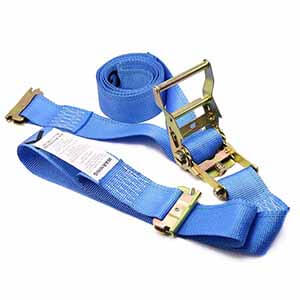
The E-Track accessories are designed to work with E-Track systems, which are a popular method for securing cargo inside enclosed trailers, trucks, and vans. These hooks are versatile to attach to various E-Track-compatible accessories.
Choosing the Right Hook for Your Lorry Straps
Choosing the proper hook type for your lorry straps need to consider below factors to ensure a secure and safe transport.
Weight Capacity
Each hook type has its specific weight rating, you should choose the hook that can handle the maximum load of your cargo without risk of failure.
For light weight cargo, such as bicycles, boxes, you can choose to use S hook straps or cam buckle straps.
For heavy duty cargo, such as machinery or construction materials, you can choose to use the straps with double J hooks, Chain and hook, or Flat hooks. The specific weight capacity is on the tag information on the strap.
Type of Load
The nature of your cargo (fragile, bulky, or irregular-shaped) will also affect the use of tie down strap hooks.
For fragile goods, you can choose to use E Track hook or snap hook to attach to the proper anchor point to prevent slip or shift.
For bulky or irregular-shaped loads, you’d better choose Double J hooks, Chain and hook, or Grab hooks to keep the cargo tightly secured.
Environmental Conditions
Consider the weather or environment in which your cargo will be transported. If your transportation conditions are always rainy and snowy, or the environment contains a high amount of salt, you need to choose the hooks that are weather-resistant or corrosion-proof.
How to Ensure Secure Transport with Cargo Straps?
To ensure your cargo remains safe and stable throughout transport, proper use of cargo straps and hooks is essential. Here are the tips to follow:
Proper Strap Tension
Whether you are using the ratchet straps with hooks or cam buckle straps with hooks, you need to tighten the strap to a proper tension, not over-tightened or too loose. Ensure the strap is aligned flat without twists, because twisted straps will reduce the tensioning effect.
Checking for Wear and Tear Before Use
Before every use, you need to inspect the webbing, the hooks, and the anchor points for signs of damage, rust, or deformation. Look for cracks, frayed edges, bent hooks, or any signs of metal fatigue. If any, replace a new one immediately.
Proper Hook Engagement
Ensure that the hooks are fully engaged with the anchor points and won’t loosen. Snap hooks must be securely locked in place, and Double J hooks or Flat hooks should have full contact with the anchor surface.
Anchor Point Stability
Check the anchor points on your vehicle or the trailer, see whether they are strong enough to support the load and securely fastened. Before tie down, you need to ensure the anchor points are not loose, rusted, or damaged.
Avoid Sharp Edges
When securing the strap, ensure it will not rub against sharp edges or corners, as this can cause wear or tear during transit. You can use edge protectors if necessary.
Benefits of Using the Right Hook and Anchor Pairing
Selecting the correct hook and anchor point pairing for your cargo straps will bring you several benefits:
Enhanced Load Security
The right combination of hooks and anchor points can ensure the cargo remains securely fastened and prevent movement or slippage during transport. This is especially important because even a slight movement during transit will lead to accidents or damage.
Extend Equipment Lifespan
Proper pairing between hooks and anchor points helps minimize wear and tear on your equipment. For example, using the flat hook on the rub rails and the E Track hooks on the E Track systems will ensure that both the hook and anchor point share the load evenly. In this way, you can maximize the life of your equipment.
Are you looking for cargo straps with hooks for your tie down need? You’ve come to the right place. Webslingness produces various types of tie down straps with hooks to meet a variety of different tie-down needs. We also provide custom service for unique designs, specific colors, and logo printing, custom packaging, etc. Contact us to get your ideal strap at Wholesale Price Today!
You may also be interested in:
Dave Lee
Dave Lee has amassed over two decades of experience in the cargo control industry, serving as a product manager. Prior to joining Webslingness, he spent three years at a transportation company.


